


Cybersecurity – Tips for Staying Safe Online #3
 Eagle Bank|October 5, 2021
Cybersecurity Tips – October 2021
Cybercriminals are always coming up with new, devious techniques to trick you. Two of the most common methods used are Phishing and Social Engineering.
The best way to prevent phishing and social engineering is to be informed.
-
-
-
-
-
- Be cautious about all communications you receive and do not click on links that you are not sure are legitimate.
- Never give your information to an unsecured website or for a transaction you have not initiated. Remember, a reputable company will not ask for this information.
- Change passwords regularly.
- Don’t be tempted to click on pop-ups.
- Don’t ignore updates.
-
-
-
-
First, we will discuss phishing. Phishing is the practice of sending fraudulent communications that appear to come from a reputable source through your email. Their goal is to steal sensitive information, such as bank account, credit or debit card numbers, or log-in information. They may also direct you to a website so they can install malware on your device.
Once the Bad Actor has your information, you are in danger of falling victim to identity theft, which can result in serious consequences for your financial stability and credit.
Another method used is Social Engineering. In the first quarter of 2021 there was an 87% increase in social engineering scams, as compared to the first quarter of 2020. Three-quarters of the successful scams involved the attacker using information about the victim to lend credibility to the scheme.
So, what is Social Engineering? It is the use of deception to manipulate individuals into divulging confidential or personal information that may be used for fraudulent purposes.
Examples of social engineering range from phishing attacks where victims are tricked into providing confidential information. Sometimes these are presented as an urgent and official sounding voicemail to convince victims to act quickly or suffer severe consequences. This type of social engineering is known as “vishing.”
The private information learned by the bad actors can then be used to gain access to valuables, perform fraudulent transactions, or to steal your identity.
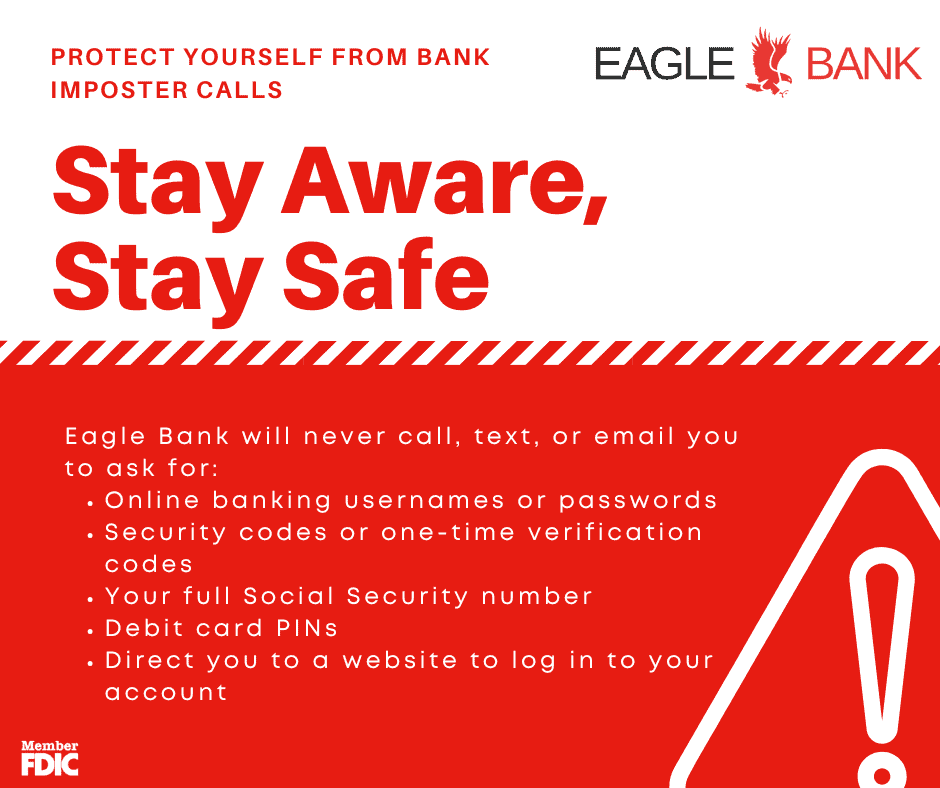
Remember, Eagle Bank will never call you to ask for your account number, password, or other confidential information.